TNC's have not really moved on since the 90's in general. My interest was piqued by this new little board from TARPN (Terrestrial Amateur Radio Packet Network).
The NinoTNC is so named because the project was started in 2015 by Nino, KK4HEJ and has been developed since then. The latest design with the blue board was released in 2020 and the project continues.
This is a TNC that will operate up to 9600 baud to the radio and is simple to configure using on board switches.
It comes as a kit and with a little patience and a multimeter is a nice little build. It took me about 3 hours and that included testing at various stages and filming segments as I built.
The build sequence is very nicely done. You start with the crystal and then a few resistors and capacitors. Next you fit the socket for the CPU.
Now additional capacitors, including the tantalum capacitors where you must be careful of alignment. A resistor network and 2 pots for deviation and delay on the edge of the board. A voltage regulator is also fitted.
After fitting the USB socket, the device is powered up and a voltage test is done between the 2 socket pins labelled.
Now the rest of the build can be completed and final tests can be done. Everything is done from the board itself, making the tests simple to do once you understand the sequence.
Finally the board can be fitted into a box of some kind. This fine 3D printed case was sent to me by Matt, 2E0YML. Thanks Matt :)
I have done a couple of videos on this and you will find them below. Now all I need to do is interface it with the radio :)
Back in the 90's, I was heavily involved in the local packet network. This was well before the Internet became a normal thing! I dabbled briefly in AX25 packet but moved into the TCPIP Side of things quite soon after.
In the Morecambe Bay area, there were quite a few stations linked together known as the BayMAN (Metropolitan Area Network). It was great fun watching what would become normal Internet protocols working over 1200 baud via radio! We also had a licensed station up at Lancaster University too, with a chat server (WWConvers) and links around the world.
I eventually set up GB7MBC which added a DXCluster to our list of services. GB7MBC was the first Internet linked DXCluster in the UK and is still popular today. Of course, it runs, like most DXClusters, over the Internet now as packet radio in general cannot handle the amount of traffic with skimmer spots etc.
Linda was talking with a friend, Matt, G7HMV who was involved with packet in the south and mentioned it to me. Before I knew it, I was playing with AX25 packet again!
North West Packet Group was formed soon after, based around a FaceBook group, which at the time of posting has over 200 members. I could not believe the interest!
I decided to use my NoV and put the GB7MBC BBS on the air. It is accessible in the Morecambe and Lancaster area on 144.950MHz.
A second BBS has been set up in the Rossendale Valley area. This is well located and is GB7ROS.
Currently, we are the only BBS's in the North West and we will have some forwarding nodes coming online soon!
I have set up a website to help enable people to get involved and to provide a central information hub for installing node software etc and this is growing nicely. You can find it at http://www.nwpg.website
The biggest challenge for new users of packet radio is that virtually nothing has happened since the interest in the mode waned towards the end of the 90's. The old well loved programs like Winpack simply do not work under a modern Windows system.
That said, both BPQ and FBB have linux versions which are up to date. LinBPQ and LinFBB install nicely on a Raspberry Pi and work flawlessly. I have documented the installation of both on the website.
It remains to be seen if this resurgence of interest continues. It is wonderful to see people experimenting and enjoying the mode again.
Brian and I decided to brave the elements again this week. The forecast was mixed but looked to be improving throughout the day. (Spoiler: it didn't!).
It was rather gusty and the wind followed the tree line, so we were afforded little respite. Never mind, onward brave adventurers ;)
The bandhopper went up like a dream. I really have the hang of it now and it takes no time at all. The shelter was a different proposition :)
Linda suggested the shelter to me last week and we had a look for a suitable one. We ended up with this one from Amazon
It all packs down into a 2ft long bag and I think once I have got the hang of it, it should be possible to erect it in under 5 minutes. The ground sheet is good and strong and fitted via toggles. The two short poles are built in and there is one long sectional pole to thread. The poles are held together with an elasticated cord and they can be a bit of a pain until you realise that pushing in one direction is the way forward, rather than trying to pull them. There is a short video on YouTube showing how to do it but it does not really show too much.
As. you can see above and in the short video below, there is enough room for a small table and chair. You could probably get a table and two chairs if you knew the other person well enough ;)
It certainly worked. The main shelter was pegged down with the supplied pegs and just to be sure, I guyed the shelter down with the 4 supplied guys. Again, there is no instruction on how to do this but I attached them to the four loops on the shelter as it seemed to be the correct thing to do. You can see one of them here..
It didn't blow away, so I guess I got it right :). For someone used to camping or other shelter/bivvy type tents, this would seem simple but to me, it was completely new.
In all, it took me about 20 minutes to erect this time but I know a lot more about it now.
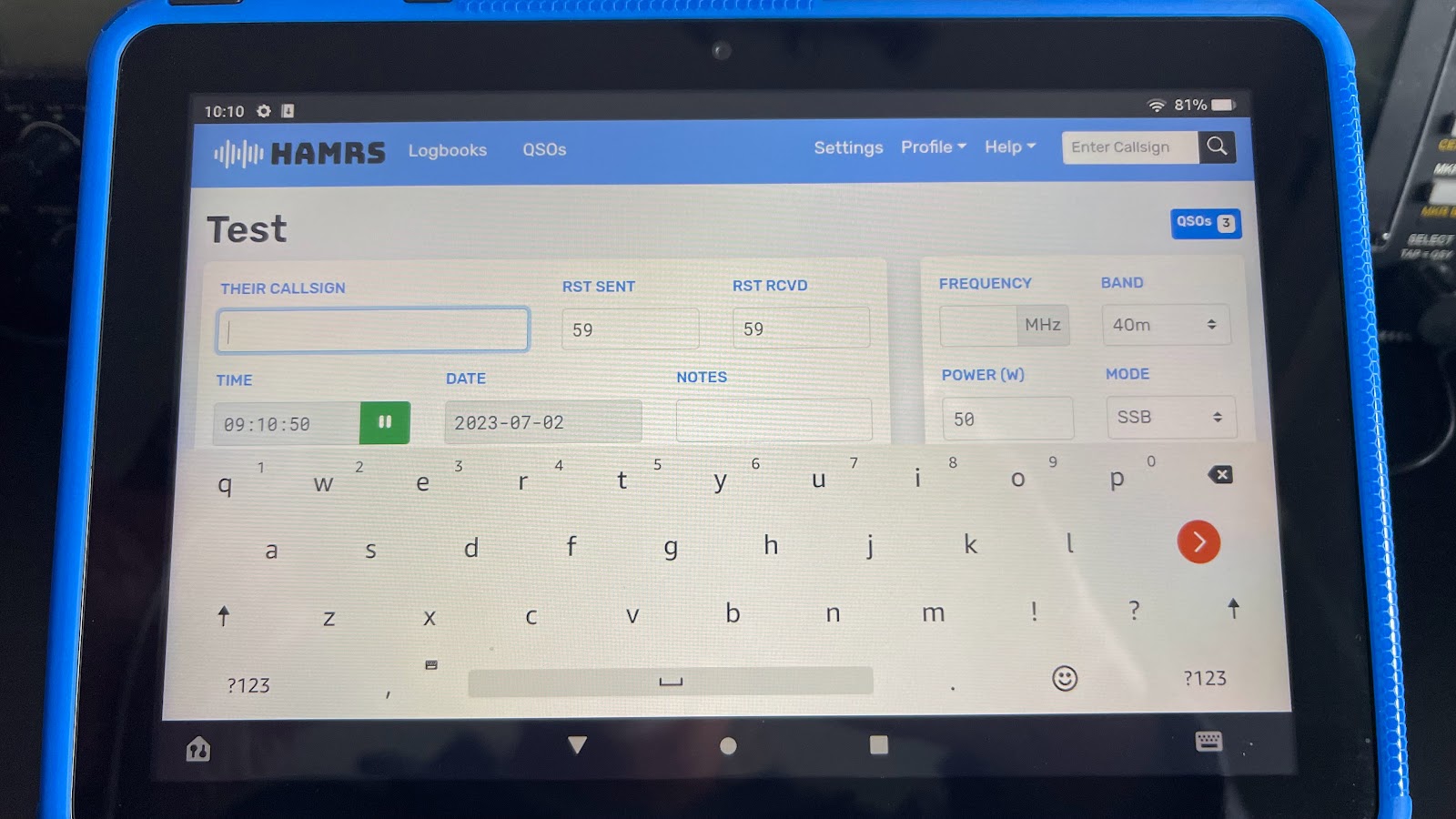
As well as this, I have been looking at alternatives for logging for some time. I have been using my phone with HAMRS so far and although this works really well, it means having the phone on a stand of some kind and renders it unusable for filming.
The previous week, Brian brought his Amazon Fire tablet with him. What a brilliant idea! I managed to get a refurbished one from Amazon at a good price and downloaded HAMRS on to it. HAMRS is available on the Amazon App Store.
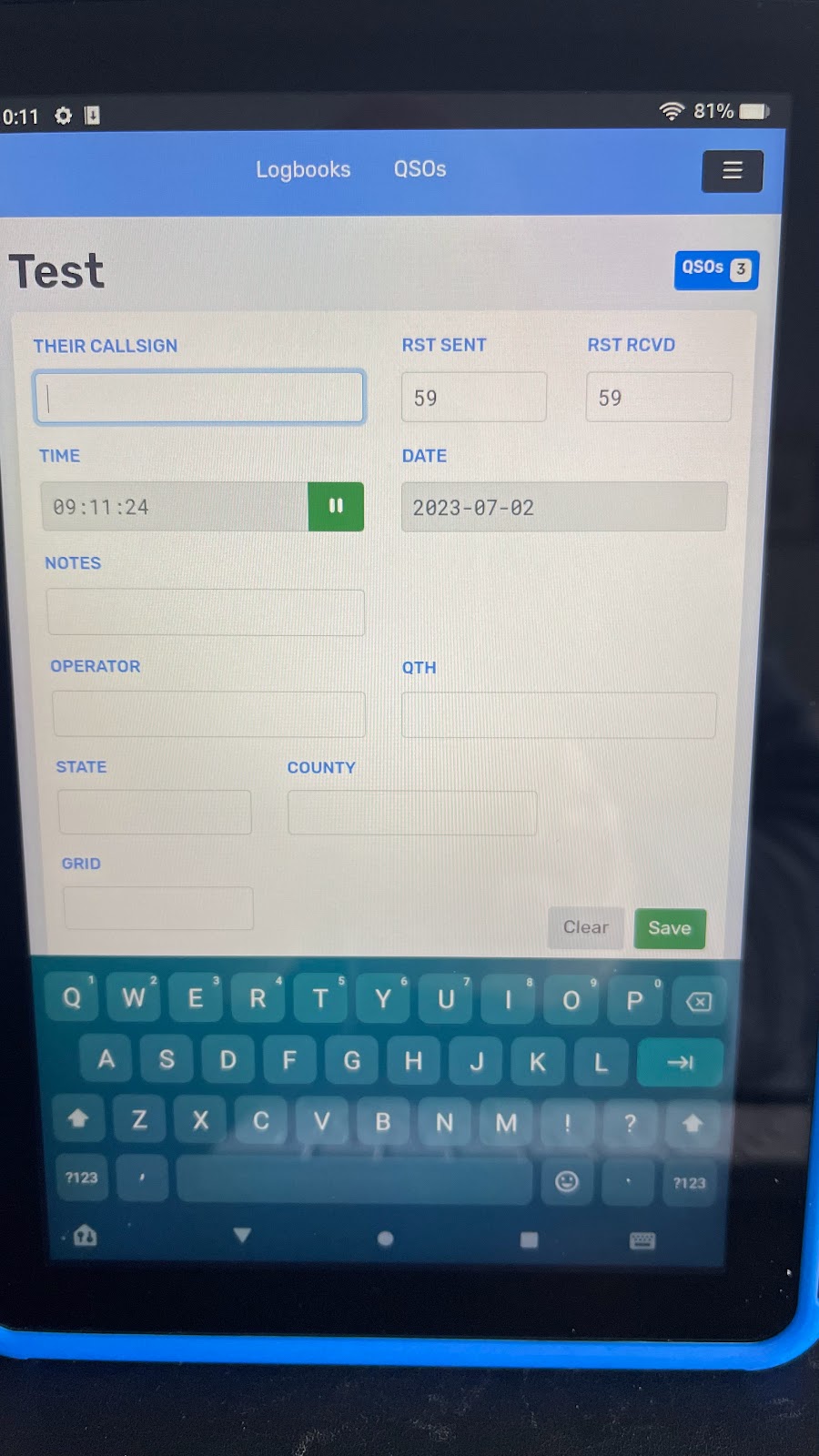
Now I found my first frustration! The standard keyboard is large and even in portrait, covers the Save button.
The obvious thing to do was to find a smaller keyboard. The only one I could find that allowed resizing was Gboard. The only way to get this was to hack the tablet a bit and install the Google Play stuff. This was surprisingly simple to do and I got Gboard and set it to its smallest size. Now in portrait mode, I can get to the Save button easily.
Job done there then.
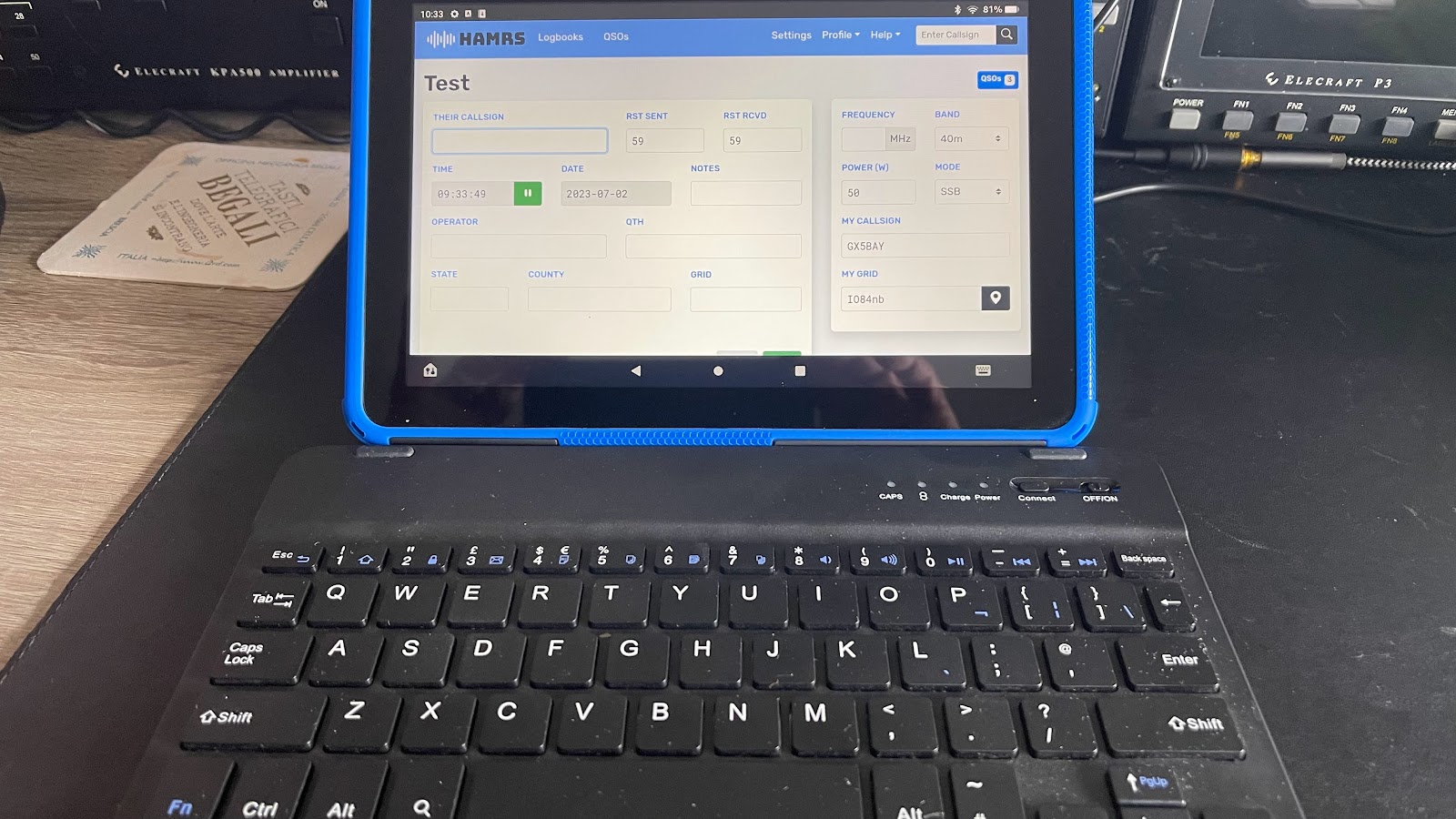
My next frustration was found almost immediately. Neither keyboard gave be a 'Return' key. They both appear to simply tab between fields. I suppose that I could simply tap 'Save' but it was bugging me. A good friend offered me a small Bluetooth keyboard to try. As soon as I connected this, the internal keyboard vanished and I had a full screen app with a 'Return' key :). Now all I need to do is enter a callsign, let QRZ and HAMRS do their magic via my iPhone hotspot and hit 'Return' to log it. result!
All in all, a really nice day out and we mostly managed to miss the rain. I had *just* managed to get my gear away when the heavens opened! Brian was not so lucky but we got his gear away with no issues and left feeling a bit damp but happy :)
Anyone who knows me, knows that I enjoy computers, I like to connect my radio to a computer to simplify logging etc. I have nothing against technology in general. I have been in communications and IT for years, professionally.
It's not that I am against data modes. I just don't understand the draw of FT8.
I have tried it and I guess it's OK but it seems that the whole world and its canine companion is using FT8. It's even invading VHF currently. Looking at the waterfall, some people are using incredible amounts of power as well!
As a low signal mode, I can see the interest from a propagation point of view. It's like a 2 way version of WSPR I guess but other than that I fail to see the enjoyment. I know people who have blown the finals on their radios by running them at full chat on FT8! Why? I mean, just why? Where is the challenge?
What about running it at 1W, or maybe 100mW? Of course, you might struggle at times to be heard through all the high power stations using double the bandwidth of everyone else, but at least it would be a challenge. I just do not get it. Linda used FT8 for 3 months on 20-30W and achieved DXCC without any difficulty. It's all too easy.
This year, I am concentrating on CW, from home at least and trying to get contacts is a nightmare. Now I appreciate that conditions are bad but getting contacts on SSB or CW is difficult. It sometimes seems that every band is open with FT8 but nobody is listening on any other mode.
I put calls out for ages on several bands and I can see that the bands are open by the RBN reports on CW but I get very few responses. In contrast, the FT8 frequencies are bouncing. Does nobody want to chat anymore? Are we becoming a hobby of computers talking to each other with us interacting occasionally?
Why not accept the challenge of SSB or CW on the HF bands? If you can't get an aerial out at home, go mobile. You can use a cheap end fed aerial and a battery, it doesn't have to cost a fortune. Portable radio can be a lot of fun, especially if you have a friend to go with. It's much more fun than watching a screen as well!
I am sorry if this came over as a bit of a rant and maybe it is the Grumpy Old Man starting to appear in me? Maybe it is just me, I don't know.
I hope to work you on SSB/CW very soon and have a good chat :)
OFCOM this week released their consultation document on the future of Amateur Radio in the UK and their proposals to move the hobby forward.
It is an interesting if somewhat long document with one or two minor errors but on the whole, a considered look at the hobby I love.
I am going to attempt here to formulate my thoughts prior to responding in full to the document and I hope that ALL amateurs in the UK will do the same. This is REALLY important to the future of our hobby and the biggest changes in some time, right across the licence levels.
Before I start, I want to thank OFCOM for their considered approach to modernising Amateur Radio. It is a complex task, involving parties well outside the UK and outside Amateur Radio as a whole. I do not envy them the task. That said, I reserve the right to disagree with them where I feel they have not thought something through well enough. I also reserve the right to change my mind after due consideration. This is of course, a working document and the changes are due to happen over a three year period. We do however, need to respond to this NOW! The closing date for you to air your views is 4th September 2023. This will come sooner than you think!
I am going to respond to the questions asked in the document in order and also add some of my own thoughts. I would appreciate any thoughtful comments on the proposals, or even my answers.
I was tidying up the boot of the car and thought it would be interesting to summarise the equipment I take portable. It's quite astonishing how it grows but I think I have everything I need now.
Did I really just say that???
It has been a very useful exercise for me. Apart from tidying up the boot and boxes, I got to realise just how lucky I am to be able to have all this gear and get the enjoyment out of using it! I live in an area of outstanding natural beauty, access to places to operate with very little background noise and enough space to play with aerials.
I always make sure to protect my portable radios with decent padded cases. They are not cheap radios on the whole and spending a reasonable amount on protective cases makes a whole lot of sense to me.
My QRP GoBox is a case I have had for some years and I used to transport my K3 in it on DXPeditions. I managed to get a piece of pick and pluck foam that fitted perfectly from eBay and relined it.
The QRO Box also came via eBay and cost a little more but was not overly expensive. It's a great box and nothing inside will come to any harm, short of being run over by a Steam Roller!
My aerials have all been reviewed on the YouTube channel but it was interesting to get them out one by one and think of their individual benefits. They all have a different part to play.
One thing I forgot to mention in the video was tools. It is always handy to have a few small tools available. Allen keys, cutters, screwdrivers, pliers, that sort of thing. A multimeter is handy too. Cable ties and tape complete this section.
I doubt I will be yomping up any fells, so I usually have the car close to hand but I could be very portable if needed and still be able to operate for 2-3 hours with a small backpack.
Portable radio is just such fun and you never know just what is going to pop up. I am just hoping we get some decent daytime conditions soon. I really would like to drop to QRP levels and see what I could achieve there but alas, the present conditions make it really difficult.
This video is a little longer than my usual fare but I hope you find it informative and enjoyable.
Brian and I went back to Dave's field this weekend and had a great time. You cannot underestimate the sheer amount of fun to be had with portable radio, especially when it is a shared experience.
One of the things we wanted to achieve this time was to get Brian's station running well. We identified a bad connector from last week and made a couple of leads up to correct the issue. He took the TS480SAT and powered it from his new Beaudens power station.
This little unit performed flawlessly throughout the day, running the radio at 50W SSB quite happily. The great thing is that it is small and light. Absolutely perfect for this kind of operation. If used at QRP levels, it would last ages! At 50W SSB, it would certainly last for most of the day. As it was, less than half of the charge was used.
It proved to be very quiet, RF-wise, which is obviously the main focus for us :). Bear in mind that the radio in use is not the most power efficient portable radio.
The next thing was how well I could put up the BandHopper. This was erected in much less time than the first and will be even quicker next time. Every day is a learning day!
We managed to get the aerials up just before it started to rain. We quickly relocated the radios to the cars and started to operate. The bands were not great, there having been a couple of minor flares, but as our noise floor was zero, it was not a problem from our side. I started on 40m and Brian was on 20m on the Slidewinder.
In fairness, I think I had the best of it. The bands were not great but 40m is usually fairly busy on a Saturday and I had a slow but steady start. 20m was not as good but Brian was managing a few contacts.
Brian was the first to crack and moved his station outside the car and I followed shortly after. We swapped bands, with Brian on 40m on the Slidewinder and me on 20m on the BandHopper. I discovered that I could lower one end of the dipole, keeping the tension on lightly and altering the aerial for 20m. Much quicker than having to drop the mast.
Much hilarity ensued when Brian moved the slider on the Slidewinder and when checked, it was absolutely bang on on 40m!! I bet he couldn't do it again 😆
I then moved to CW and managed a couple of contacts but the bands were closing in a bit and we decided to close down.
What a great day again though. I can really recommend getting out of the house and just having some fun for a few hours in an RF quiet place. You really don't need much to do it. If you make it QRP, you really need very little indeed and you could easily have a full station in a small backpack, as SOTA and WOTA stations know well.
As usual, I made a video of our day. I was using a gimbal for the first timed I definitely need more practice :)
I had another go from the garden today and managed to nab a park for POTA and a couple of local portable contacts but conditions were appalling! I tried several bands but it was hard going. Even the FT8 frequency (don't even get me started there!) was fairly quiet on 40m.
I did manage to get one CW contact with David, G4HMC who was QRP. Hard work but a valid contact and shows the power of CW. I would never have managed to complete this contact on SSB.
Here is the video, for what it's worth. Completely unedited this one ;)
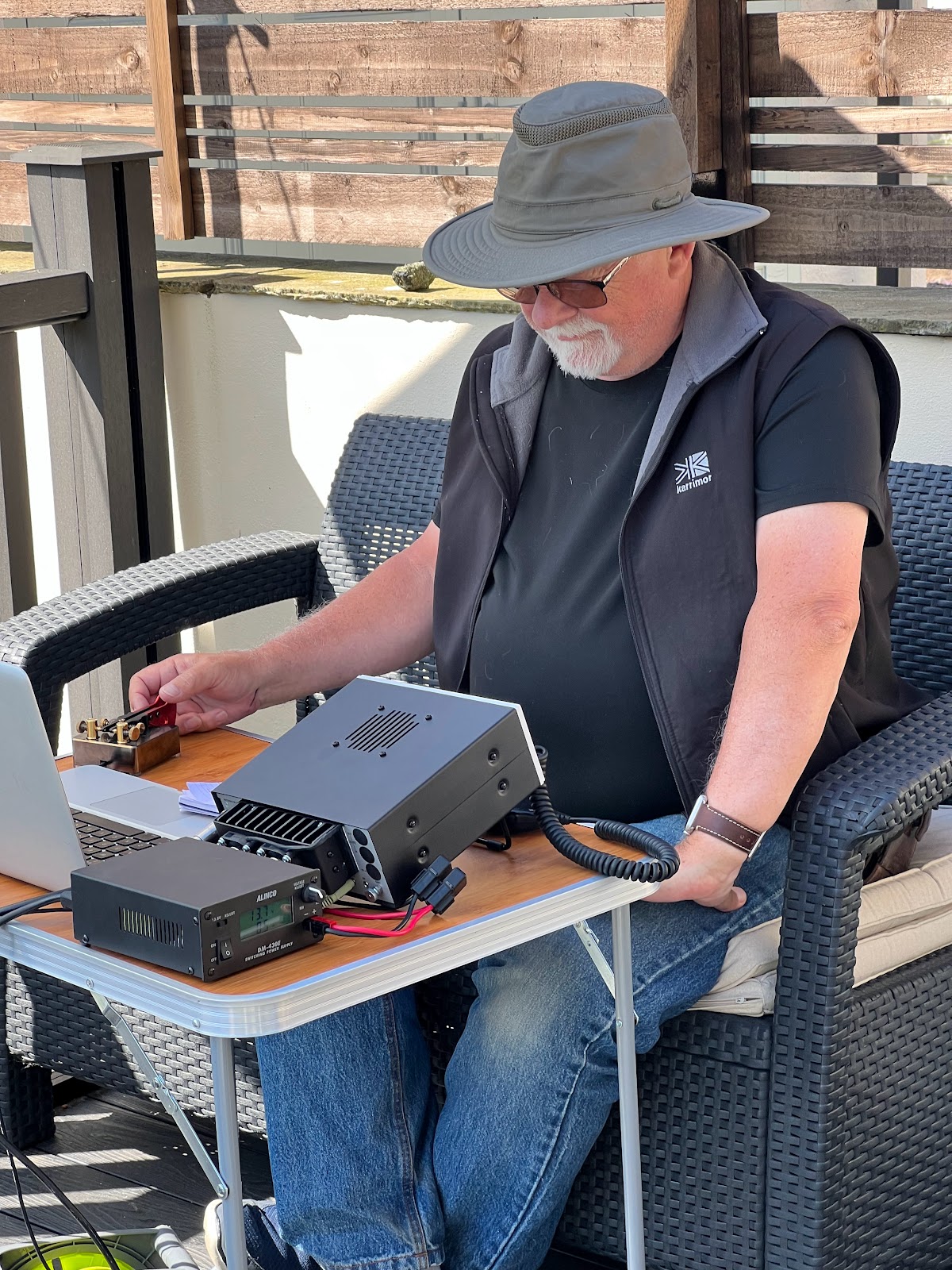
I finally managed to venture out with the Mission RGO One and activate POTA G-0070 on both CW and SSB. My normal spot was not useable as the sheep were out, so I changed site and I am glad I did. It was a better location and I could get the Slidewinder away from the public. There were much fewer of them here too! I put 8 radials on the Slidewinder and it worked well.
I had some issues early on and the tuner in the RGO ONE was struggling. I had another look and the PL259 at the bottom of the Slidewinder was not fully tight. My bad as they say. Now everything worked just fine.
I was able to sit outside the car and the chair was surprisingly comfortable. The little table was OK but a little small and made CW a bit more difficult as it tended to sway. On the list is a better table for sure!
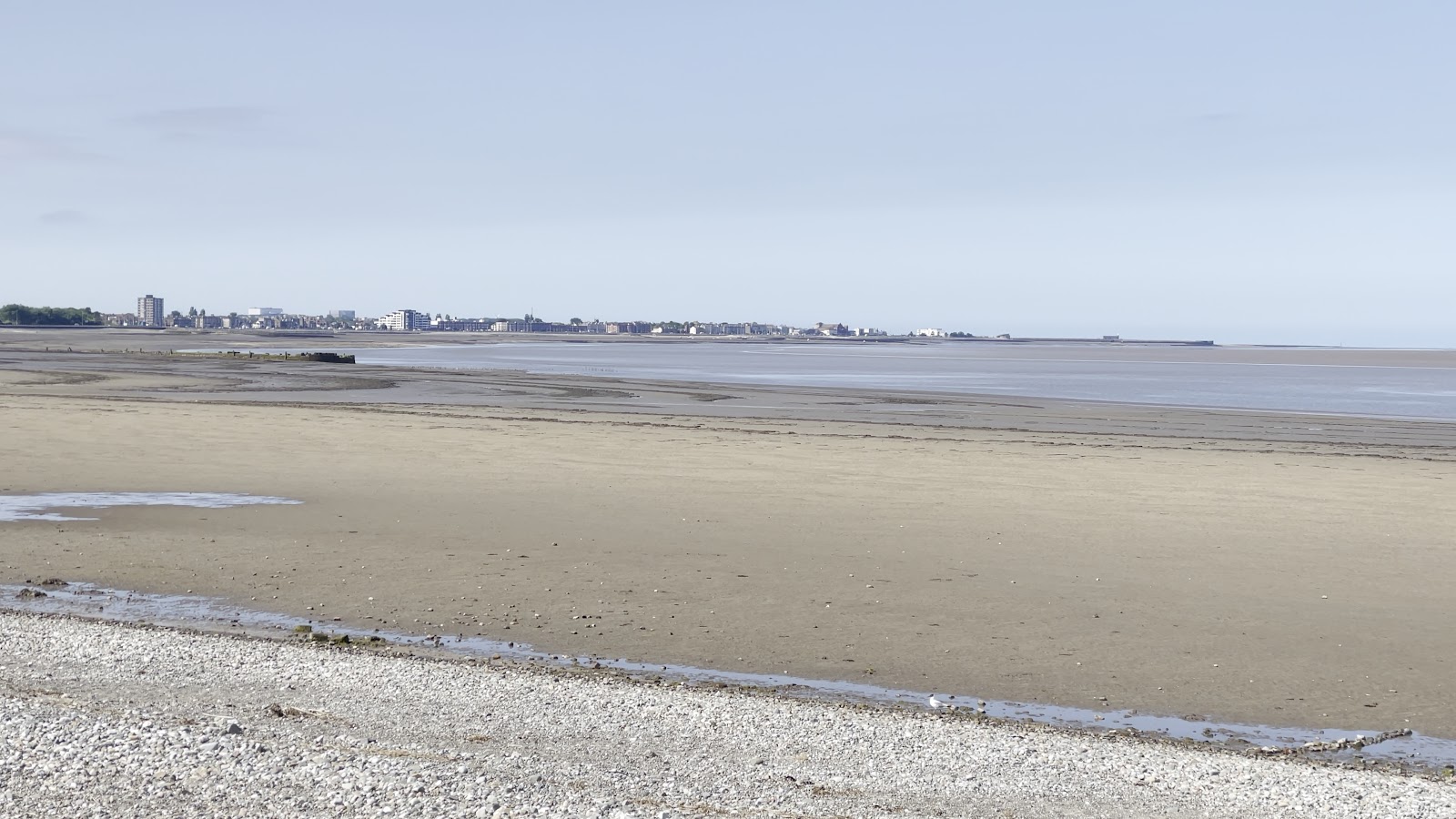
The sun was out all day and the view was glorious! Morecambe Bay is such a beautiful place to be.
I did learn a valuable lesson. you would think at my age I would have thought about this and in fact, I did bring my Tilley hat with me, then completely forgot to change to it! Learn my lesson and don't wear a baseball cap in direct sun! I should have 'got down with the kids' and worn it backwards :)
For some reason, my dear wife thinks this is hilarious!
I have to say that my Morse head was not on today for some reason but I managed a few contacts and they were patient with me :)
40m can be tricky at times in the UK. Today was no exception and the band was not being kind. I really thought that I may not complete the activation at times. After battling 40m for a while, I made the decision to move to 20m. I started on CW and sent a spot to the POTA website but nothing doing.
I was really getting worried now and I moved to SSB with trepidation. After all, CW is easier than SSB for contacts, right?
I posted a spot on the POTA website and started calling. Very quickly, I had a good run going. By this time, I had gone to 40W and this made all the difference. Of course, this is why the RGO ONE was a good fit for me. It behaved beautifully all the way through. I didn't bother trimming the RF gain as some stations were very weak with me but to be honest, there was no need. The radio was really quiet with just the interference from the electrified railway track close by. I only got this when a train went by, so I wasn't worried about that either.
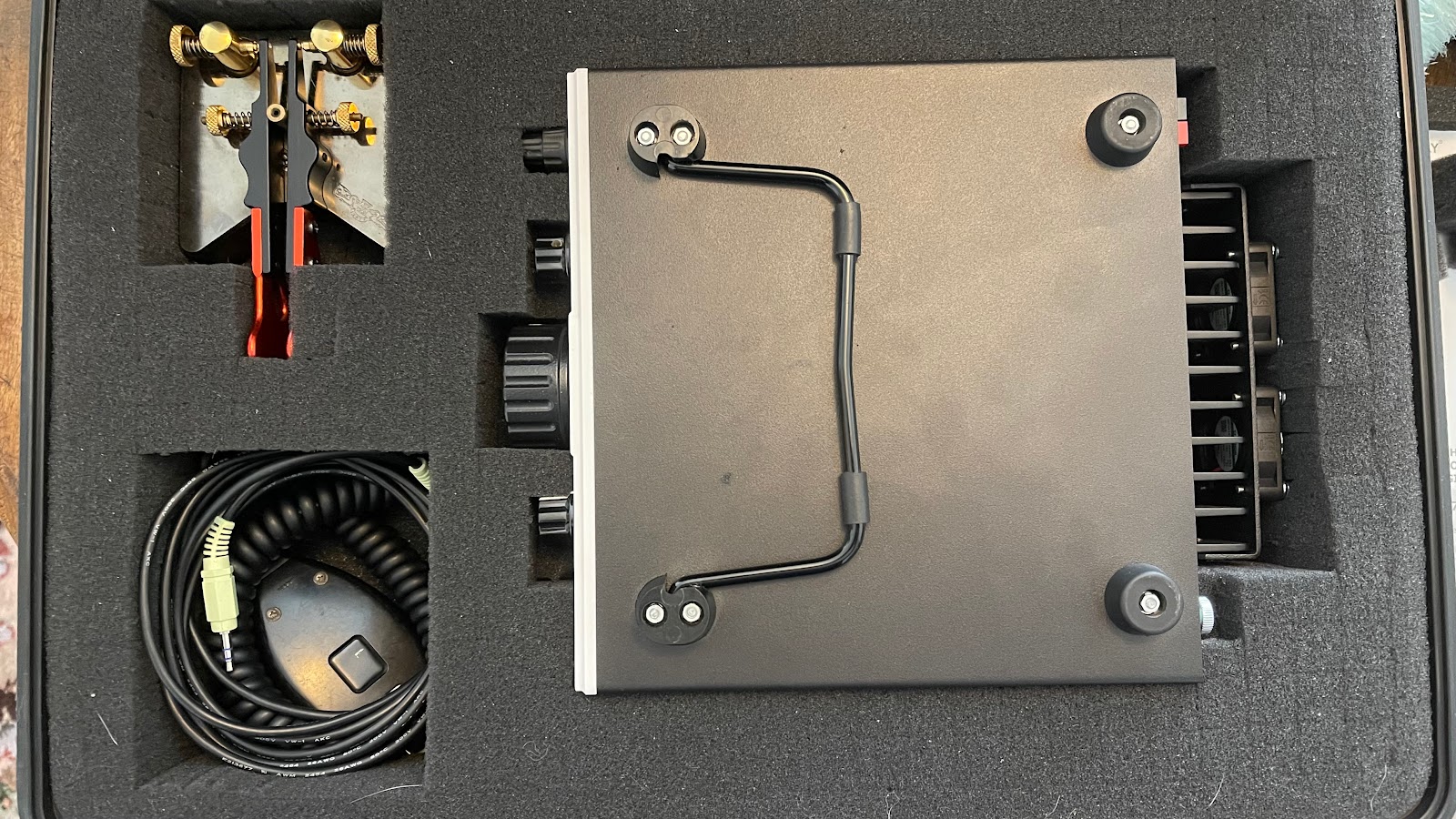
I ended up with 28 contacts in total and it was getting close to lunchtime, so once the run finished, I packed up. I found a perfect Pelicase copy to put the portable shack in for transport.
The RGO ONE fitted my operating style perfectly, as I hoped it would and Linda recorded my TX audio on her JST-245. The result sounded superb and I am really happy with it. I think this radio and I are going to be very happy together. I just need to get a little more used to it but it really is not hard to use.
Everything works as it should and I found it a perfect portable HF radio.
I recorded a video or my activation and I hope you enjoy it. The GoPro battery ran out about halfway through, so I missed my little run on 20m SSB. Additional batteries are on order!
OK, this is a bit of a rant I guess. I will try to be objective and start with basic stuff :)
The idea of a callsign is to identify the station transmitting. To this end, we have a protocol that makes sense.
Always Give Your Own Callsign Last!
So, if you are in a QSO and passing the transmission and wish to give both callsigns, the format is 'To You From Me'
Therefore, if I was passing transmission to my dear wife, I would say
G0YLM, from G0VGS
I might even simplify it further by simply saying
G0YLM, G0VGS.
She might then say,
G0VGS, G0YLM
This confirms the owner of both callsigns. I am G0VGS and she is G0YLM. Simple and intuitive. Think of it as a greetings card.
To Ian, Happy Birthday, from Linda.
Of course, the only callsign you are required to give is your own. In a net though, especially a 'round robin' style net, passing the transmission ensures that it is going to a specific station.
While we are on the subject of nets, ALWAYS pass it to a specific station! If you are not sure who to pass it to, pass it to net control, or at least to the last person you heard. NEVER throw it up in the air! This only causes confusion and people start doubling with each other with the best intentions.
These are simple little 'rules' that can only help improve operating practices.
<rant>
OK, here goes! Deep breath!
Something I have noticed recently and is really starting to annoy me are incomplete handovers. People give your callsign and completely omit theirs! Anyone listening will be totally confused by this! I hear this on the start of an over and at the end too!
For example. I pass it over to G7RXM..
G7RXM, G0VGS
He then says..
G0VGS
then carries on with his over. So who is G0VGS? Is it me or him? I hear it at the end too. G7RXM is passing it to G0VGS..
Over to you Ian, G0VGS...
I then reply
G7RXM, G0VGS
Again, who owns what callsign???? This is simply lazy and confusing. Protocols are there for a reason and we should, for good operating practice, try to be as professional as possible. It is truly annoying!!
</rant>
Maybe it is just me but it is only a simple little thing that can cause real confusion. You would actually fail some professional exams for this kind of error. Knowing who owns which callsign is a fundamental part of our hobby.